Last Updated: November 1, 2026
Quick Summary
To resolve red tag fuel issues, do not remove the tag or restart the equipment yourself. Read and photograph the tag, stop all use, notify responsible parties in writing, and hire a licensed independent testing firm to diagnose the problem. Complete repairs through a qualified contractor, pass the required test, submit documentation to the issuing agency, and get written clearance before returning the equipment to service.
- Only the issuing authority or a licensed professional can clear a red tag.
- A shut-off tag is the most serious and keeps equipment locked out.
- Missing paperwork is one of the most common reasons a tag stays in place.
- Test reports should include raw data to support reconnection.
- Name the responsible party and clearance signer in the lease before a tag happens.
Table of Contents
- What a Red Tag on a Fuel System Actually Means
- How to Remove a Red Tag from a Fuel Tank: The Step-by-Step Process
- Your Red Tag Inspection Checklist: What Regulators Look For
- How Fuel Inventory Reconciliation Helps You Clear the Tag Faster
- Storage Tank Compliance Documentation: What to Gather Before Reconnection
- Tenant and Landlord Responsibilities When Fuel Equipment Is Tagged
- Frequently Asked Questions
What a Red Tag on a Fuel System Actually Means
A red tag on a fuel system is an official notice that a dispenser, tank, or fuel line has failed inspection and must not be used until the cited problem is fixed and cleared.
This guide walks you through resolving red tag fuel issues step by step, from reading the notice to restoring service.
A red tag fuel notice usually traces back to a few common causes:
- A leaking tank, line, or fitting
- A failed integrity test
- Missing or expired compliance records
Warning, Repair, and Shut-Off Tags: How to Tell the Difference
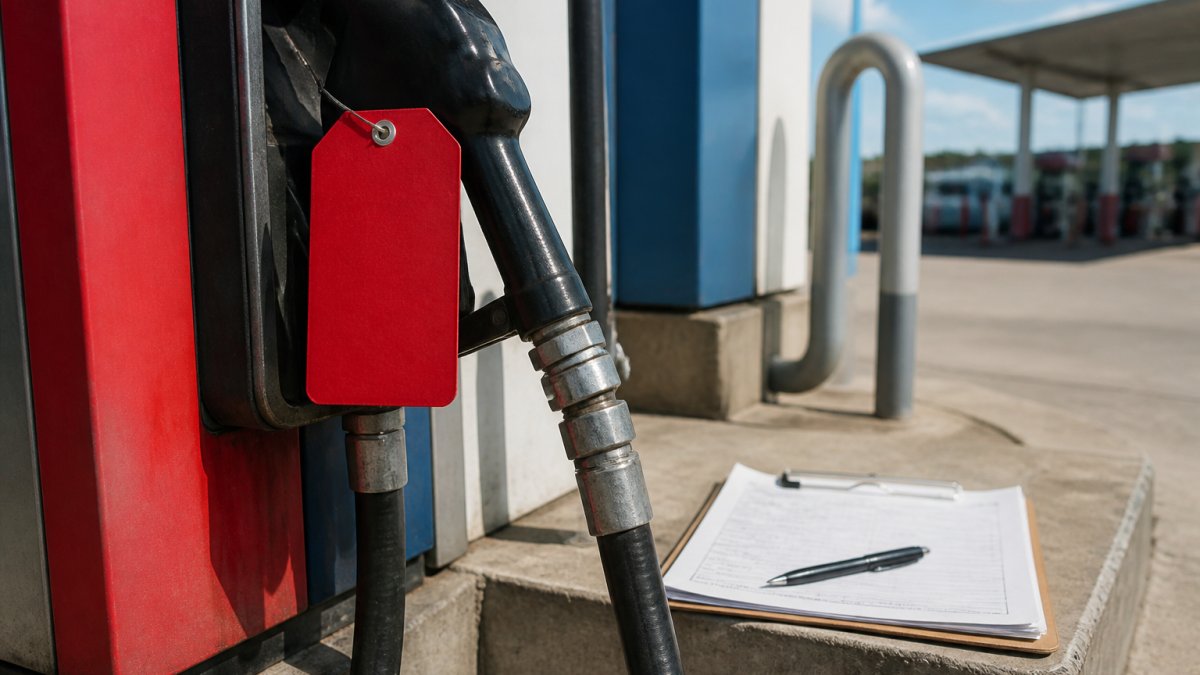
Not every tag carries the same weight. A warning tag flags a problem that needs attention but may not stop operation. A repair tag means work is required before the equipment passes. A shut-off tag is the most serious: the equipment is unsafe to operate and stays locked out.
Read the tag carefully. It names the cited hazard, the code reference, and the issuing agency. That information tells you the urgency and who can clear it.
How to Remove a Red Tag from a Fuel Tank: The Step-by-Step Process
Removing a red tag from a fuel tank follows a defined path, you cannot skip steps or clear the tag without documentation that satisfies the regulator. For the red-tag, deadline, and suspected-leak scenarios that shape this process, see underground fuel systems and testing. Forms and agency names vary by state, but the order does not.
- Read the tag in full and photograph it. Note the cited condition, the code reference (often a state rule citation or EPA 40 CFR 280), the issuing agency, the inspector name and badge number if listed, and the date. Photograph the tag and tagged component before anything is touched.
- Stop all use and secure the equipment. Lock out the dispenser, post the tag where it is visible, and instruct staff not to dispense. Do not remove the tag, reset the dispenser, or restart the submersible pump.
- Notify the responsible parties in writing. Send a dated notice to the owner, operator, and any landlord named on the permit, including the tag photo and cited condition.
- Call a licensed, independent testing firm to diagnose. The diagnosis should identify the failed component and the test that will prove it is corrected. Ask for the specific test method (tank tightness, line tightness, or leak detection) and the expected turnaround.
- Complete the required repairs through a qualified contractor. Repairs to tanks, piping, dispensers, and leak detection must be done by qualified personnel, and state rules may also require a licensed contractor. Keep invoices, parts records, and repair photos.
- Schedule the required test or inspection to confirm the fix. The test must be performed by an authorized party, often an independent testing firm rather than the repair contractor, so results are not self-certified.
- Assemble the documentation package. At minimum: the tag photo, diagnosis, repair records, passing test report with raw data, current leak detection records, and any required state forms. Missing paperwork is one of the most common reasons a tag stays in place.
- Submit documentation to the issuing agency and request re-inspection. Follow the agency's submission method (portal, email, or in person) and keep proof of submission.
- Get written clearance before returning the equipment to service. Do not dispense fuel until you have written clearance from the issuing authority or authorized inspector. File the clearance with the site's compliance records.
- Confirm service restoration and monitor. After reconnection, verify the dispenser, leak detection, and inventory reconciliation are functioning, and keep the first week's readings on file.
Every day under the tag is a day of lost revenue, so speed matters. If your site is already tagged, see your site is red-tagged and cannot sell fuel for the path back to service.
Who Is Authorized to Diagnose and Clear the Tag
Only the issuing authority or a licensed professional can clear a red tag, usually a licensed tank testing firm or qualified contractor who performs the required test and submits proof of correction.
A common mistake is hiring a firm that also sells the repair, which creates a conflict of interest. For suspected releases and unresolved alarms, release investigation and tank integrity testing covers what an authorized firm performs.
What Affects Repair Cost and Timeline
There is no single figure for how long a tag stays on or what it costs to clear, but the cost drivers are consistent: the failed component (a dispenser part is usually cheaper than a tank or line repair), whether a release is suspected, whether permits and re-inspection are required, and how quickly documentation is submitted. Diagnosis and testing are typically billed separately from repair, and re-inspection may carry its own fee.
Your Red Tag Inspection Checklist: What Regulators Look For
A red tag inspection checklist keeps you from missing the items that block reconnection. Regulators want proof the cited condition is fixed and the system is sound.
- The cited hazard is corrected and documented
- Tank and line integrity test results are on file
- Leak detection records are current
Missing paperwork is one of the most common reasons a tag stays in place.
How Fuel Inventory Reconciliation Helps You Clear the Tag Faster
Fuel inventory reconciliation compares measured fuel in the tank against recorded sales and deliveries to spot losses. When the numbers do not match, it can point to a leak or metering problem, often what triggered the tag in the first place.
Reconciling inventory before your inspection shows the regulator you are tracking loss and flags issues before they become a bigger citation. A simple daily routine works:
- Record tank readings at the same time each day
- Compare against sales and delivery records
- Investigate any gap that keeps repeating
Clean reconciliation records support your case that the system is under control.
Storage Tank Compliance Documentation: What to Gather Before Reconnection
Storage tank compliance documentation is the set of records that proves your system meets EPA 40 CFR 280 and state rules. Without it, reconnection stalls. Gather these before the inspector arrives:
- Current tank and line integrity test reports
- Leak detection and monitoring records
- Installation and repair records
Keep everything organized by site, equipment, and test date. To see how records are organized for inspection, digital tank compliance records shows the filing structure that keeps documents ready.
Tenant and Landlord Responsibilities When Fuel Equipment Is Tagged
When fuel equipment is tagged, the split between tenant and landlord depends on the lease and who owns the equipment. In practice, the party responsible for the tank or dispenser handles the repair and testing; the other party needs written notice. This is where disputes cost the most time while the pumps sit idle.
Sort Out Ownership and Responsibility First
Answer these questions in writing before you call a testing firm:
- Who owns the tank, lines, and dispensers?
- Who is named on the permit and compliance filings?
- Who pays for testing, repair, and re-inspection?
Put the answers in a dated letter or email signed by both parties. A clear repair timeline and a named contact prevent finger-pointing. If a tenant operates the station but the landlord owns the tank, both sides should agree on who calls the testing firm before a tag ever happens.
Tenant Notice and Documentation
If you are the tenant, notify the landlord in writing as soon as you receive the tag, including the tag photo, cited condition, issuing agency, and date. Keep a copy of every notice, email, and text. If the landlord is responsible for the repair and delays, a written record supports a later claim for lost revenue or lease remedies. Follow the notice method your lease requires and keep proof of delivery.
Landlord Obligations and Access
If you are the landlord, respond in writing with a repair plan and timeline. Provide access to the equipment, compliance files, and any prior test reports the tenant does not hold. If the lease puts repair responsibility on you, delaying can expose you to lease claims and, in some cases, local commercial-property enforcement. Confirm in writing who will hire the testing firm and who will submit the clearance request.
When the Dispute Stalls the Repair
If the responsible party will not act, escalate in writing: send a formal demand with a deadline, then seek guidance from the issuing agency about who is authorized to arrange the repair and clearance. For commercial sites, review the lease's remedies section; for residential rentals, local housing or tenant-assistance offices can explain notice requirements and timelines. Do not remove the tag or restart equipment to resolve a dispute, that converts a lease problem into an enforcement problem.
Frequently Asked Questions
What does a red tag on a fuel tank or fuel system mean?
A red tag means an inspector or regulator has found a condition that makes the fuel system unsafe to operate or non-compliant with EPA 40 CFR 280 and state rules. The tag identifies the specific hazard, such as a leak, faulty equipment, or missing documentation. You must not remove the tag or restart the equipment until the cited issue is fixed and the system passes a follow-up inspection. USTEX provides independent testing to document the repair and support tag removal.
Can a facility keep dispensing fuel while equipment is red-tagged?
No. A red tag typically requires you to stop using the tagged equipment immediately. Continuing to dispense fuel can escalate penalties, void insurance coverage, and create serious safety hazards. The tag stays in place until a licensed technician or certified inspector verifies the repair and clears it. If you have multiple dispensers, only the tagged unit must be shut down, but you should confirm with your local authority whether the entire system must be taken offline.
Who is authorized to inspect and clear a fuel-system red tag?
Only a licensed or certified professional, such as a licensed plumber, gas fitter, or qualified tank testing firm, can diagnose and repair the issue. The final clearance usually comes from the regulatory agency that issued the tag, often after reviewing repair documentation and a passing inspection. In Wisconsin, firms like USTEX (DATCP licensed specialty firm #560989) provides independent testing for tag-related work.
How long does it take to resolve a fuel tank red tag?
Timelines vary by the complexity of the issue and how quickly repairs and inspections can be scheduled. Simple fixes with complete documentation can clear in a few days; major repairs or missing compliance records may take several weeks. Fuel inventory reconciliation and a complete storage tank compliance documentation package can speed up the process.
