Last Updated: November 2, 2026
Quick Summary
Compliance testing is the set of physical tests and inspections that prove your fuel storage system meets federal and state environmental rules, including EPA 40 CFR 280. It covers tank integrity, line tightness, leak detection performance, and the records that tie those results together. Most small sites need three core tests: tank tightness, line tightness, and leak detector testing.
- Review release detection records monthly and confirm the automatic tank gauge is logging.
- Run line leak detector tests and leak detection performance checks annually.
- Tank and line tightness tests are due every 3 years where your detection method requires it.
- A missing monthly record can trigger a violation even when equipment passed every test.
- Keep test reports, detection logs, maintenance records, training records, and corrective-action evidence on file.
Table of Contents
- What Compliance Testing Covers for Small Fuel Retailers
- Underground Storage Tank Testing Requirements You Must Meet
- UST Release Detection Testing and Leak Detection Basics
- Your UST Compliance Inspection Checklist, Task by Task
- UST Compliance Records and Documentation That Satisfy Regulators
- Request Dispatch for Your Next Compliance Test
- Frequently Asked Questions
What Compliance Testing Covers for Small Fuel Retailers
The National Association of Convenience Stores counted 122,620 stores selling fuel in its 2026 US Convenience Store Count, a slight rise of 768 locations. Most of those sites are small operations without an environmental specialist on staff. That is exactly why compliance testing for small fuel retailers matters: it is the scheduled proof that your tanks, lines, and detection equipment are not leaking into the ground.
At USTEX LLC, we run these tests across Wisconsin as a DATCP licensed specialty firm (#560989).
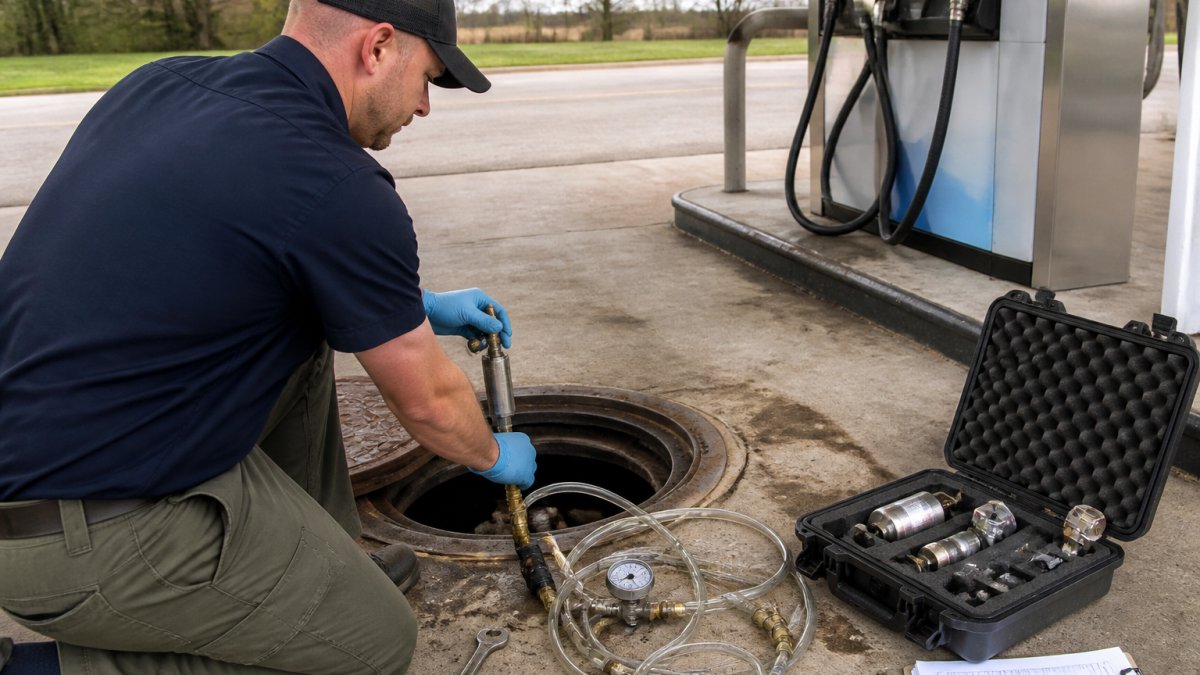
Compliance testing is the set of physical tests and inspections that show a fuel storage system meets federal and state environmental rules, including EPA 40 CFR 280. It covers tank integrity, line tightness, leak detection performance, and the records that tie those results together.
The Tests Most Small Operators Actually Need
Most small sites need three core tests, not a dozen. Tank tightness testing checks the primary tank for loss. Line tightness testing checks pressurized piping. Leak detector testing confirms the detection equipment itself works. Fuel quality sampling, tank calibration, and aboveground storage tank checks apply in specific situations rather than every year.
If you are unsure which test applies to which piece of equipment, compare tank tightness, line tightness and leak detector testing side by side before you schedule anything.
Underground Storage Tank Testing Requirements You Must Meet
Federal rules under EPA 40 CFR 280 require underground storage tank systems to have release detection. Wisconsin adds its own layer: the state agriculture department publishes a 2026 compliance calendar for gasoline dispensing facilities built to help facilities track environmental requirements.
The calendar is a planning tool, not a substitute for testing. Requirements vary by tank age, construction, and the detection method installed. Confirm your specific obligations with the agency that regulates your site before your deadline, and keep written confirmation.
When your tank test is due, schedule underground storage tank testing in Wisconsin.
UST Release Detection Testing and Leak Detection Basics
UST release detection testing verifies that the equipment designed to catch a leak is actually working.
Release prevention and detection work as a pair. Detection tells you a release happened; tight equipment prevents one. Small operators get tripped up here because a failed detector often looks like a failed tank. It usually is not. A common mistake is replacing equipment before confirming whether the detector or the tank failed the test.
For detector checks and precision line testing, review mechanical and electronic line leak detector testing and request scheduling for the equipment you have installed.
Your UST Compliance Inspection Checklist, Task by Task
Here is a working checklist for small convenience store operators. It is organized by task and deadline so nothing slips between inspections.
Monthly tasks
- Review release detection records and confirm the automatic tank gauge is running and printing or logging
- Walk the site for spills, stains, and sump conditions, and log what you find with date and initials
- Confirm the line leak detector is powered and in its normal state
Annual tasks
- Line leak detector test on pressurized piping (mechanical and electronic)
- Leak detection equipment performance check
- Operator training refresher and training record update
Every 3 years
- Tank tightness test where your detection method requires it
- Line tightness test on pressurized piping
Ongoing
- File every test report by site, tank, and date
- Keep tank registration and permit paperwork current
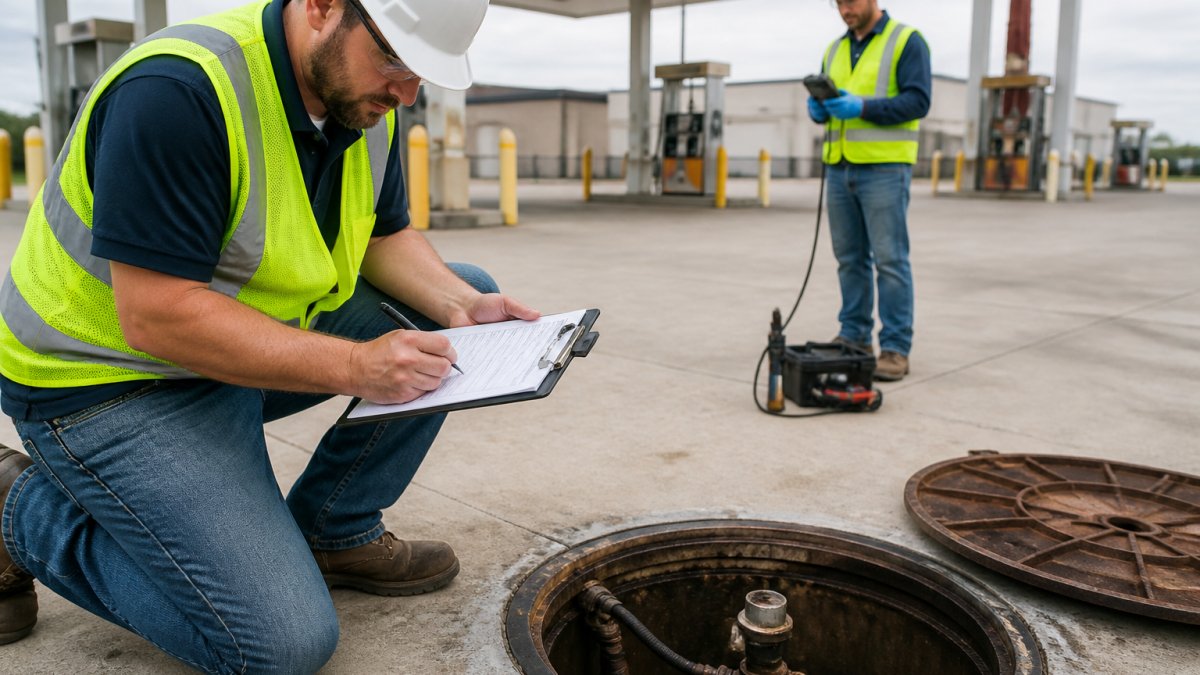
Watch out: a missing monthly record can trigger a violation even when the equipment passed every test.
How to Verify Your Local Requirements
Federal rules under EPA 40 CFR 280 set the floor, but the deadlines on your calendar come from your state agency. Before you trust any checklist, confirm three things with the agency that regulates your site: the testing interval your detection method requires, the report format the reviewer accepts, and whether your tank age or construction triggers additional testing. Ask for the confirmation in writing and keep it with your records.
What to Have Ready Before the Inspector Arrives
Pull four things: current test reports, release detection logs, the tank registration and permit paperwork, and proof of operator training. Have them in one folder, physical or digital.
Here is the task-and-deadline checklist the article lays out for small convenience store operators.
| Frequency | Task |
|---|---|
| Monthly | Review release detection records and confirm automatic tank gauge is logging |
| Monthly | Walk site for spills, stains, and sump conditions; log with date and initials |
| Monthly | Confirm line leak detector is powered and in normal state |
| Annual | Line leak detector test on pressurized piping (mechanical and electronic) |
| Annual | Leak detection equipment performance check |
| Annual | Operator training refresher and training record update |
| Every 3 years | Tank tightness test where detection method requires it |
| Every 3 years | Line tightness test on pressurized piping |
UST Compliance Records and Documentation That Satisfy Regulators
UST compliance records are the written trail proving each test happened, on schedule, with a passing result. Regulators want the test report, the raw data behind it, the date, the equipment tested, and the name of the tester.
What to Keep and for How Long
A practical file for a small site holds five record types:
- Test reports, tank tightness, line tightness, and leak detector results, with raw data appended
- Release detection logs, monthly gauge readings and site walk notes
- Maintenance and repair records, what was fixed, when, and by whom
- Training records, operator training dates and certificates
- Corrective-action evidence, what you did after any failed test or notice
Retention periods are set by your state agency and by the federal rule, and they vary by record type. Confirm the required retention period with your regulator in writing rather than guessing, and keep records at least as long as the longest applicable period.
An Audit-Ready Filing Structure
Organize by site, then by equipment, then by date. Name each file with the site, equipment ID, test type, and date so a reviewer can find it without opening it. Keep a one-page index at the front of the folder listing every test and its date; that index is what turns a box of paper into an audit-ready file.
We issue same-day documentation in the format the reviewing agency requires, with measured results and raw data appended.
After a Failed Test or a Notice
A failed test or a notice of violation is not the end of the file, it is the start of a corrective-action record. Document the failure, the cause if known, the repair or retest scheduled, and the passing result that closes it. Keep that sequence together so you can show a regulator the problem was found and fixed, not hidden. Organize tank testing reports and facility records by site, equipment, and test date so documents are ready for inspection and follow-up.
Request Dispatch for Your Next Compliance Test
A failed test or a red tag costs money every day the pumps stay down. That is the practical case for scheduling before the deadline instead of after a notice of violation arrives.
We prioritize red-tagged sites, and testing and reporting are handled with direct access to our founder, Doug Metzker. We perform testing only. We hold no competing claims on repair or construction work, so the results you get are the results we measured.
Best for: independent stations, fleets, and municipal sites that need fast, regulator-ready documentation. Skip if: you need repair or construction work performed, which we do not provide.
Frequently Asked Questions
What compliance tests do small fuel retailers need for underground storage tanks?
Most small operators need three core checks: release detection testing on tanks and piping, leak detection verification for the equipment that monitors the system, and periodic tank and line tightness testing. Fuel quality sampling, including sulfur content checks on diesel, is often required separately. The exact mix depends on your tank type and the rules your state agency enforces under EPA 40 CFR 280. Confirm your specific schedule with your state regulator before booking.
How often must UST release detection equipment be tested?
Release detection equipment generally needs annual testing, and some components require more frequent checks. Automatic tank gauges, line leak detectors, and sump sensors all fall under this. Your state agency sets the final schedule, so verify it locally. A calendar-based reference, like the state compliance calendar published for gasoline dispensing facilities, helps you track deadlines so a missed test does not turn into a notice of violation.
What should a fuel retailer have ready for a UST compliance inspection?
Have your release detection records, tank and line tightness test results, leak detection logs, and proof of operator training on hand. Inspectors also look for spill bucket and sump condition, corrosion protection documentation, and financial responsibility records. Keep everything organized in one binder or digital folder. Missing paperwork is one of the most common reasons a site gets flagged, even when the equipment itself is working fine.
What happens if a fuel station fails a compliance test?
A failed test usually triggers a notice of violation or a red tag, which can shut down fueling until the issue is resolved. You will need to correct the problem, retest, and submit proof to the reviewing agency. Fast, regulator-ready documentation matters here because every day the pumps are down is lost revenue. Ask your testing provider whether they deliver same-day reports in the format your agency accepts.
How do you choose a qualified compliance testing provider?
Look for a licensed, independent firm with no financial stake in repair or construction work. Independence matters because it removes the conflict of interest that comes from a tester who also sells the fix. Ask whether the founder or a named engineer handles testing and reporting directly, whether reports include raw data, and how fast documentation is delivered. A provider that prioritizes red-tagged sites helps you get back to selling fuel sooner.
If a failed test, an inspection notice, or an expiring permit is holding your site back, do not wait for the next deadline to pass. USTEX LLC provides independent tank and line testing with same-day, regulator-ready reports, priority scheduling for red-tagged sites, and direct access to our founder on every job. Get started with USTEX LLC and request dispatch for your next compliance test to get your pumps back in service.
