Last Updated: October 28, 2026
Quick Summary
A fuel system compliance audit checklist is a structured review of tanks, piping, dispensers, leak detection, venting and overfill equipment against the rules governing your facility. It produces dated records showing what was checked, what passed and what was corrected before a regulator visits.
- Gather previous inspection reports, leak detection records and open corrective actions before walking the site.
- Check the current federal and state rules for your facility type, since a checklist on outdated rules misses items.
- Verify the leak detection method for each tank and confirm monitoring records are complete for the review period.
- Reconcile the maintenance log against the monitoring log to catch systems switched off during repairs.
- Score each failed item by severity and likelihood to decide which fixes need immediate action.
Table of Contents
- What a Fuel System Compliance Audit Covers
- Fuel Tank Condition and Integrity Checks
- Fuel Pumps, Piping, Hoses and Connections
- UST Leak Detection Requirements to Verify
- Venting, Overfill and Spill Prevention Equipment
- Building a Fuel System Inspection Form
- UST Compliance Records and Audit-Ready Documentation
- Using a UST Compliance Inspection Checklist Step by Step
- Step 1: Review records before you walk the site
- Step 2: Walk the tank area with the record file in hand
- Step 3: Inspect dispensers and piping
- Step 4: Verify leak detection method and records
- Step 5: Test overfill and spill equipment
- Step 6: Score each finding by severity and likelihood
- Step 7: Assign corrective actions with owners and deadlines
- Step 8: Verify the fix and close the loop
- Step 9: Sign, file, and schedule the next audit
- Scheduling Your Next Compliance Test with USTEX
- Frequently Asked Questions
Fuel system compliance audits are where small mistakes turn into shutdowns. For Wisconsin owners of underground storage tanks, a missed inspection item can mean a red tag, a pump shutdown and a lost day of fuel sales. A written fuel system compliance audit checklist can help organize a review before a regulator visits. USTEX LLC, a DATCP licensed specialty firm (#560989), provides independent storage tank compliance testing for fuel retailers, fleet facilities and municipal sites across Wisconsin.
A fuel system compliance audit is a structured review of tanks, piping, dispensers, leak detection and venting against the rules that govern your facility. It can produce dated records that show what was checked, what passed and what was corrected.
What a Fuel System Compliance Audit Covers
A useful audit starts with scope. Know which tanks, lines and dispensers belong to the review, and which records must be on file for each one. Gather the previous inspection reports, leak detection monitoring records and any open corrective actions before anyone walks the site.
Audit scope for underground and aboveground tanks
Aboveground tanks need their own checks for secondary containment, corrosion, and the condition of supports and fill points. Write down every tank by ID, capacity, product and installation date so the scope is clear from the start.
Federal and state rules that set the standard
The federal baseline for USTs is 40 CFR Part 280 from the U.S. Environmental Protection Agency (the EPA). Check the current rules for your facility type before you finalize the checklist, because requirements change and a checklist built on outdated rules will miss items.
Fuel Tank Condition and Integrity Checks
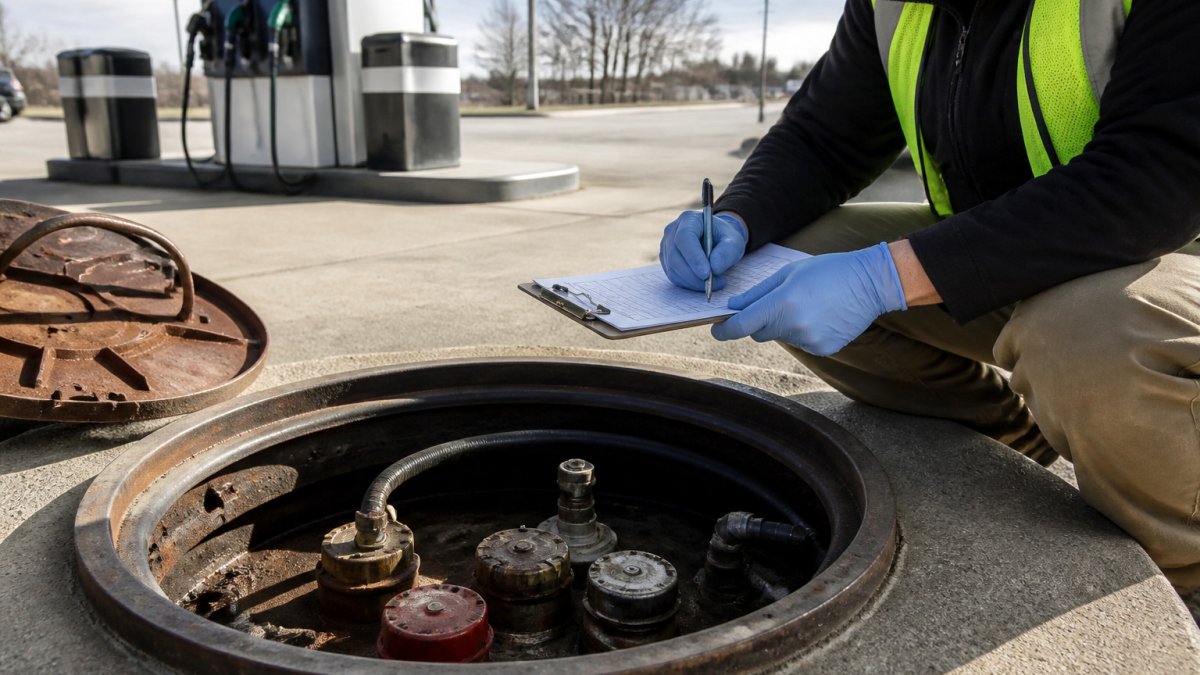
Start the physical inspection at the tanks. Look for corrosion, cracks, bulging, and deformed fittings on the tank shells and the access manholes. Check that the fill risers are sealed and capped and that the spill containment buckets are clean and free of standing water or debris.
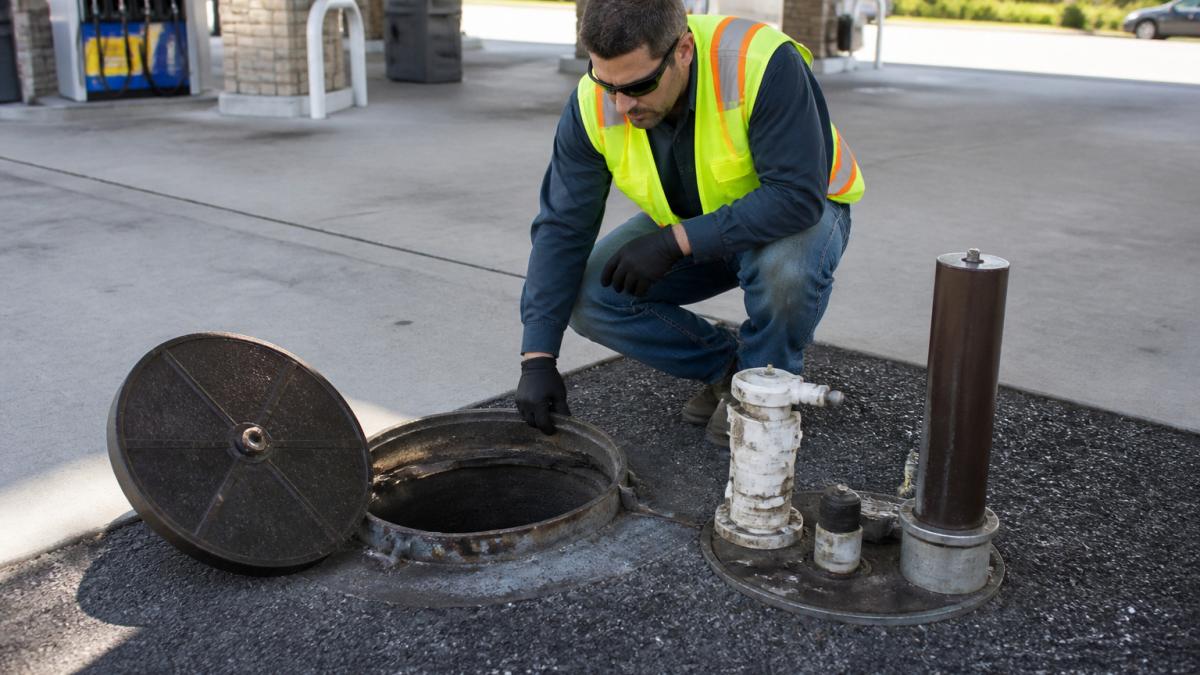
Confirm that the tank nameplate, product labels and tank identification match your records. A mismatch here should be noted. Note the condition of each tank in writing, with a date and the inspector's name.
Fuel Pumps, Piping, Hoses and Connections
Inspect each dispenser for leaking hoses, cracked breakaway couplings, and damaged nozzles. Check that the emergency shutoff devices work and that the dispenser pans are dry and intact.
Piping connections deserve close attention. Look at every visible fitting, union and flange for seepage or staining. Stained concrete or wet soil near a fitting is an early warning sign that should be investigated, not noted and ignored. Record each dispenser and line by ID so the findings can be tracked across inspections.
UST Leak Detection Requirements to Verify
Verify leak detection line by line. Confirm which method each tank uses, whether that is automatic tank gauging, monthly monitoring, interstitial monitoring or another approved method. Then confirm the monitoring records are complete for the review period.
Check the piping as well. Pressurized piping often needs its own leak detection, and line leak detectors need periodic testing (the EPA). Confirm the test dates, the results and who performed the testing.
Watch out: a leak detection system that was switched off during a repair and never switched back on will show a gap in the monitoring records. Reconcile the maintenance log against the monitoring log before the audit.
Venting, Overfill and Spill Prevention Equipment
Check that vent caps are present and undamaged.
Overfill protection is equally important.
Building a Fuel System Inspection Form
A good form turns the checklist into a record. Each form can also point to a spill bucket, sump and overfill equipment test so those items are verified at the site. Organize it by system: tanks, piping, dispensers, leak detection, venting and overfill, and spill prevention. Under each heading, list the specific items to check, with a pass, fail or not applicable column and a notes field.
Include the tank or dispenser ID on every line. Add a field for the inspector's name, the date and the corrective action required for any failed item. Keep one form per inspection so the history of each component is easy to follow.
Here is a practical starting structure for the form:
- Facility name, address and inspection date
- Tank IDs, capacities and product stored
- Tank condition and containment findings
- Dispenser and hose condition
- Piping connections and seepage checks
- Leak detection method and monitoring records
- Venting condition and cap integrity
- Overfill protection and spill bucket tests
- Corrective actions, owners and due dates
- Inspector signature and reviewer signature
UST Compliance Records and Audit-Ready Documentation
An audit is only as strong as its records. Build the record file before the auditor arrives, not after a finding is issued.
The evidence matrix: match every check to a document
For each item on your checklist, identify the specific record that proves compliance. A practical evidence matrix looks like this:
| Audit check | Evidence to produce | Responsible role | Retention trigger |
|---|---|---|---|
| Tank integrity / tightness test | Test report with tank ID, date, method, and pass/fail result | Compliance manager | Life of tank plus required period after closure |
| Leak detection monitoring | Monthly monitoring logs or ATG reports for each tank and line | Site operator | Rolling period required by rule |
| Line leak detector test | Annual test record with device ID and tester credentials | Service provider | Same as leak detection records |
| Overfill and spill equipment test | Device test sheet with date, method, and result | Service provider | Same as leak detection records |
| Repair or upgrade | Invoice, work order, and post-repair verification | Maintenance lead | Life of equipment |
| Operator training | Training roster with names, dates, and topics | Compliance manager | Duration of employment plus required period |
| Fuel transactions and reconciliation | Dispenser totals, delivery receipts, and variance reports | Accounting / fuel manager | Period required by tax and program rules |
When a regulator asks for a specific record, an index can help you locate it.
Retention periods and the closure trap
Retention rules vary by record type and by program. Do not assume a single retention period covers everything. Map each record type to its own rule and note the trigger event (inspection date, repair date, tank closure date) that starts the clock.
Chain of evidence for corrective actions
When an item fails, the record set must show three things: the original finding, the corrective action taken, and verification that the fix worked. Attach the repair invoice and the post-repair test result to the original inspection form. If a leak detection system was offline during a repair, document the outage window, the reason, and the re-verification date. That chain is what turns a finding into a closed item rather than an open liability.
Digital records and audit-ready access
Digital copies can be indexed by tank ID and date. Confirm that scanned documents are legible and complete. If your rules require paper originals, retain them.
Using a UST Compliance Inspection Checklist Step by Step
Work through the audit in a fixed order, but do not treat every item as equally urgent. The sequence below adds a scoring and follow-through layer to the checklist.
Step 1: Review records before you walk the site
Pull the previous inspection report, leak detection logs, line leak detector test records, overfill and spill equipment test sheets, and any open corrective actions. Reconcile the maintenance log against the monitoring log, a system that was switched off during a repair and never restored will show as a gap in monitoring records. Flag any gap before you leave the office.
Step 2: Walk the tank area with the record file in hand
Check fill risers, manholes, spill containment buckets, and tank condition. Confirm that the tank ID, product label, and capacity match your records. Note any mismatch. Note the condition of each tank in writing, with a date and the inspector's name.
Step 3: Inspect dispensers and piping
Check hoses, breakaway couplings, nozzles, emergency shutoff devices, and dispenser pans. Look at every visible fitting, union, and flange for seepage or staining. Stained concrete or wet soil near a fitting is an early warning sign that should be investigated, not noted and ignored. Record each dispenser and line by ID.
Step 4: Verify leak detection method and records
Confirm which method each tank and line uses, automatic tank gauging, monthly monitoring, interstitial monitoring, or another approved method, and confirm the monitoring records are complete for the review period. Confirm line leak detector test dates, results, and who performed the testing.
Step 5: Test overfill and spill equipment
Verify that each tank has an approved overfill prevention device and that the device is tested on schedule. Spill buckets should be intact and empty, and drain valves should work. Document the test results for each device, including the date and the method used.
Step 6: Score each finding by severity and likelihood
A pass/fail column is not enough to prioritize remediation. Add a simple scoring method: assign each failed item a severity (high, medium, low) based on consequence, a release, a shutdown, or a record gap, and a likelihood based on how often the condition occurs or how long it has persisted. High severity plus high likelihood is a stop-work item. High severity plus low likelihood is a scheduled fix with a firm deadline. Low severity plus low likelihood goes on the housekeeping list.
Step 7: Assign corrective actions with owners and deadlines
Every failed item can be recorded with the corrective action required, the person responsible, and the due date. Record the finding number on the repair work order so the invoice can be matched back to the original inspection line.
Step 8: Verify the fix and close the loop
When a corrective action is completed, attach the proof of repair, invoice, work order, post-repair test result, to the original finding. Re-inspect the item if the repair could have affected another system.
Step 9: Sign, file, and schedule the next audit
Complete the form with the inspector's signature and a reviewer's signature, then file it with the supporting records using the evidence matrix. Set the next audit date based on the required test intervals.
USTEX LLC provides clear, measured results with raw data appended to reports.
Scheduling Your Next Compliance Test with USTEX
A self-audit can identify items for review. USTEX LLC provides independent storage tank compliance testing. The founder, Doug Metzker, handles testing and reporting personally, and USTEX provides same-day documentation in the format required by reviewing agencies. Request a quote for your site.
If a red tag is holding up your pumps, tell us when you call so we can prioritize the visit. You can request site dispatch directly, and for Wisconsin facilities preparing for a visit, our Wisconsin UST testing preparation checklist lists what to gather beforehand. For tank tightness and leak detection testing across Wisconsin, see underground storage tank testing in Wisconsin.
Frequently Asked Questions
What should be included in a fuel system compliance audit checklist?
A complete checklist covers tank condition, piping and connections, dispensing equipment, leak detection method and monitoring records, overfill and spill prevention, vent lines, cathodic protection where used, and the written records that prove each item was checked. Each line should name the item, the pass criterion, the date checked, and who verified it. Keep the checklist consistent with logs and test reports. Keep the list tied to the rules that apply to your facility in Wisconsin and federal requirements under 40 CFR Part 280, so every item maps to a specific obligation.
How do I prepare for a UST compliance inspection?
Start by pulling your last inspection report, any open violations, and your current leak detection and testing records. Organize records by tank and date. If your facility has a red tag, keep records of corrective steps.
What records should I keep for an underground storage tank compliance audit?
Organize applicable facility records so they can be produced on request during an inspection.
How often should fuel storage systems be inspected?
Inspection frequency depends on the component and the rule that applies. Confirm current intervals with the regulator or a qualified tester rather than relying on an old schedule, because requirements and test methods change over time.
What are common UST compliance violations?
Review your site records and equipment before an inspection.
What should I do if a fuel system audit finds a compliance issue?
Document the finding, assign an owner, and set a deadline. Correct the problem with a qualified contractor or tester, retain invoices and test results, and verify the fix with an independent retest where required. If the finding triggers a red tag, request a priority retest and provide the regulator with corrective-action records. Track recurring issues so the same problem does not return at the next inspection.
What is the difference between a fuel system inspection and a compliance audit?
An inspection is a physical check of equipment condition at a point in time, such as looking at sumps, piping, and dispensers. A compliance audit can review equipment, testing, monitoring, and records in relation to applicable regulations. An inspection can be one part of an audit, which may also review documentation, schedules, and corrective-action records.
