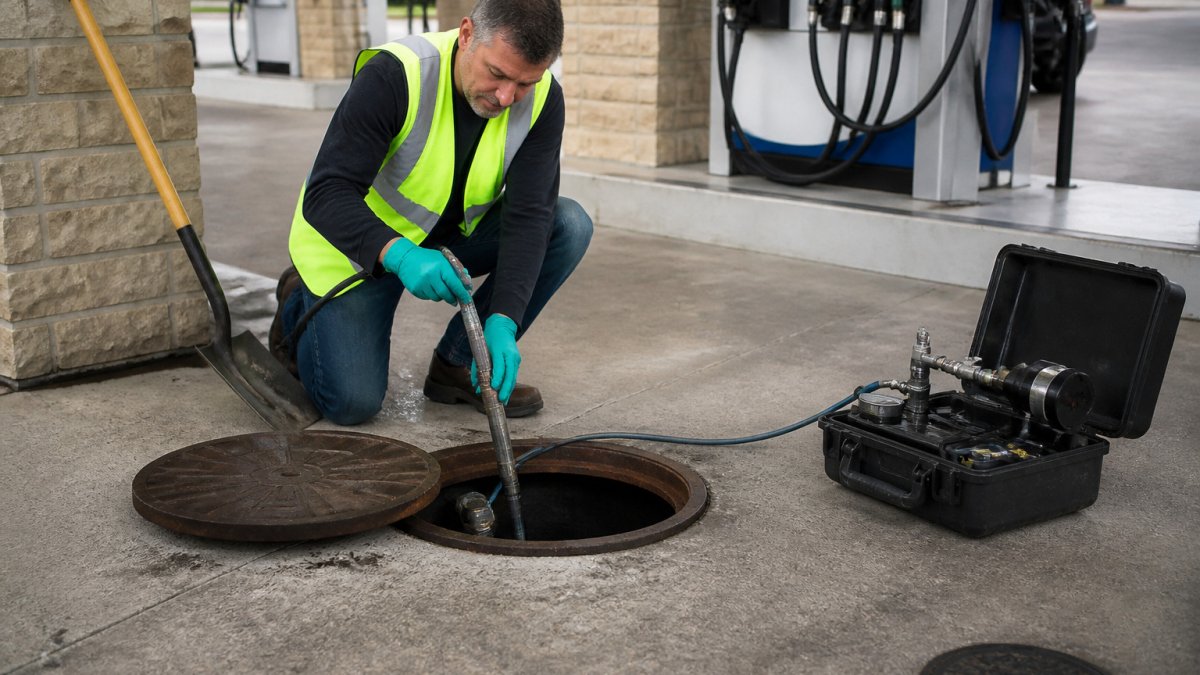
Last Updated: November 3, 2026
Quick Summary
An urgent fuel tank inspection starts with preparation. Gather your tank registration, last compliance report, and tank and piping layout, then clear fill ports, wells, and dispensers so the crew can begin work right away.
- Gather the tank registration, last compliance report, and tank and piping layout before the technician arrives.
- Move vehicles and equipment away from fill ports, monitoring wells, and dispensers.
- Assign a staff member to open the site and answer questions about deliveries and fuel activity.
- Give the site address, tank count, tank capacities, and reason for the visit when requesting service.
- Ask for a written scope with your quote so you can compare like with like.
Table of Contents
- Preparing for an Urgent Fuel Tank Inspection
- Requesting Urgent UST Compliance Testing and Getting a Same-Day Report
- Understanding Fuel Tank Inspection Costs and Next Steps With USTEX
- Frequently Asked Questions
Preparing for an Urgent Fuel Tank Inspection
When a fuel tank fails inspection or a red tag lands on your site, every hour the pumps stay down costs money. Preparation shortens the response. Before the technician arrives, pull together your tank registration, your last compliance report, and the tank and piping layout. A EPA underground storage tank regulations under 40 CFR Part 280 sets the baseline testing duties that apply to most USTs, so know which requirements your site carries.
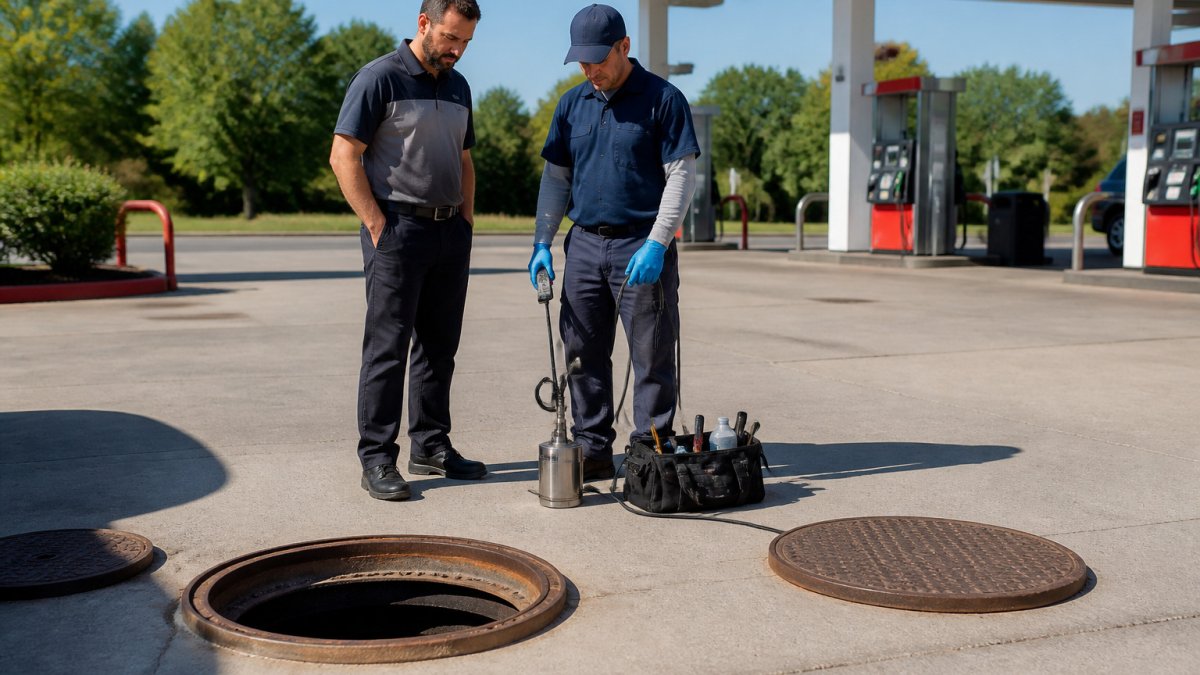
Clear the access points. If your site includes aboveground fuel tanks or generator day tanks, request aboveground tank diagnostics with the equipment details and testing scope ready. Move vehicles and equipment away from fill ports, monitoring wells, and dispensers so the crew can work right away. Confirm who on your staff can open the site and answer questions about deliveries and recent fuel activity.
Before the technician arrives, gather the key records and clear the site so work can start right away.
| Preparation item | What to do | Why it matters |
|---|---|---|
| Tank registration | Pull it together | Confirms tank details on arrival |
| Last compliance report | Have a copy ready | Shows prior testing results |
| Tank and piping layout | Gather the diagram | Shows where testing is needed |
| Access points | Move vehicles and equipment | Fill ports, wells and dispensers stay clear |
| Site contact | Assign a staff member | Answers deliveries and fuel activity questions |
Requesting Urgent UST Compliance Testing and Getting a Same-Day Report
Start with a clear request. Give the site address, tank count, tank capacities, and the reason for the visit, such as a red tag or an approaching permit deadline. Specific details let the provider schedule faster. If you are unsure which test applies, compare tank tightness, line tightness, and leak detector testing before you call.
To request dispatch, contact USTEX directly.
Understanding Fuel Tank Inspection Costs and Next Steps With USTEX
Costs depend on tank count, test type, site access, and report requirements, so pricing varies from one job to the next. Ask for a written scope with your quote so you can compare like with like. If a compliance date is close, review the situations where scheduling testing before the deadline matters. USTEX LLC, a DATCP-licensed specialty firm, provides independent testing and reporting for fuel retailers, fleet facilities, and municipal sites.
Frequently Asked Questions
How often do fuel tanks need to be inspected?
Inspection frequency depends on tank type, age, and the rules that apply to your site under EPA 40 CFR 280 and Wisconsin requirements. Underground storage tanks are subject to federal and state compliance testing, and aboveground tanks may be inspected on a risk-based schedule. Check your current permit and inspection records, and confirm the interval with your regulator or a licensed tester. If a tank has been red-tagged, the inspection must be completed before operation can resume.
How quickly can an underground storage tank inspection be completed?
Turnaround depends on the site, the test method required, and current scheduling. USTEX prioritizes red-tagged sites and provides same-day documentation in the format reviewing agencies require, but timing for each job is confirmed when you request dispatch. Having your tank records and site access details ready before the technician arrives helps keep the visit efficient.
What information should I give when requesting urgent service?
Provide your facility name and address, the tank type (underground or aboveground), tank capacity and number of tanks, the reason for the request such as a red-tag notice or permit deadline, and any prior test records. Note the contact person on site and any access restrictions. Accurate details let the tester plan the visit and prepare documentation that meets the reviewing agency's requirements.
