Last Updated: October 27, 2026
Quick Summary
Conflicts of interest tank testing arise when the person or company conducting your fuel storage tank assessment stands to benefit financially from the results they report, so their recommendation may favor their own business interests rather than your facility's actual compliance needs. Avoid this by selecting a provider whose business model includes testing only, with no competing claims on repair or construction work, and by verifying their independence in writing before testing begins.
- Confirm state licensing directly with the regulator and request the provider's written conflict-of-interest policy before engagement.
- Ask whether the testing company bids on remediation, owns repair contractors, or receives compensation from remediation vendors.
- Require the testing report to be finalized and delivered before any remediation discussion begins, with raw data and findings stated without naming contractors.
- Separate testing, reporting, and remediation into distinct functions performed by different providers to preserve objectivity.
- Request references from recent clients and ask specifically whether the provider recommended repairs and then bid on them.
Table of Contents
- Why Conflicts of Interest Matter in Tank Testing
- Identifying Tank-Testing Conflicts Before They Arise
- Tank Testing Company Qualifications and Independence Standards
- Building a Fuel Tank Testing Checklist for Conflict Screening
- Tank Testing Report Requirements and Disclosure Documentation
- Selecting Independent Underground Storage Tank Testing Providers
- Moving Forward with Conflict-Free Tank Testing
- Frequently Asked Questions
Why Conflicts of Interest Matter in Tank Testing
Conflicts of interest tank testing arise when the person or company conducting your fuel storage tank assessment stands to benefit financially from the results they report, so their recommendation may favor their own business interests rather than your facility's actual compliance needs.
When testing and remediation come from the same provider, consider whether the provider has a financial interest in the outcome.
At USTEX LLC, testing is independent, with no competing claims on repair or construction work.
Identifying Tank-Testing Conflicts Before They Arise
Personal conflicts involve direct financial gain. A tester who owns a remediation company profits when reports recommend expensive repairs; a tester related to a contractor faces the same pressure, as loyalty and business incentive align to distort findings.
Organizational conflicts happen at the business level. When one firm handles both testing and repair contracting, the structure itself creates the problem, and even well-intentioned staff face pressure to support the bottom line.
Conflicts don't require dishonesty.
The most common scenarios:
- Same company tests and bids remediation
- Testing firm owns or partners with a repair contractor
- Tester has financial interest in a remediation vendor
- Testing results directly feed into a pre-arranged repair contract
- Facility owner pressures tester to minimize findings to avoid shutdown costs
The most common scenarios where conflicts of interest emerge in tank testing include:
| Conflict Scenario | Type | Financial Pressure |
|---|---|---|
| Same company tests and bids remediation | Organizational | Tester profits from recommending repairs |
| Testing firm owns or partners with repair contractor | Organizational | Firm benefits from repair contracts |
| Tester has financial interest in remediation vendor | Personal | Direct personal gain from recommendations |
| Testing results feed into pre-arranged repair contract | Organizational | Predetermined outcome incentivizes findings |
| Facility owner pressures tester to minimize findings | External | Tester pressured to avoid shutdown costs |
Tank Testing Company Qualifications and Independence Standards
Beyond licensing and technical skill, independence is something you can verify.
Start with credentials you can check. Confirm the state license directly with the issuing agency rather than relying on a logo or claim, ask for the license number in writing and look it up.
Then examine the business structure. These are the questions that separate an independent tester from a provider with a stake in the outcome:
- Does your company bid on remediation, repair, or construction work?
- Do you own, operate, or partner with a repair or installation contractor?
- Do you receive referral fees, commissions, or any compensation from remediation vendors?
- Will the person who tests my tank be the same person who recommends repairs?
- Can you provide your conflict-of-interest policy in writing?
Honest answers matter, but so does the structure behind them. Ask who ultimately owns the business and whether any affiliate performs repair or construction work.
Look for structural safeguards, not just promises. When a firm supplies only testing, measurement, and reporting, ask whether it bids on remediation or construction work.
A useful test: ask the provider to describe what happens after a failing result.
EPA guidance on underground storage tank compliance emphasizes third-party verification in federal regulations such as 40 CFR 280. When the same firm conducts testing and sells repairs, that verification loses its credibility with regulators and with anyone who later reviews your records.
Ask for documentation of independence: the written conflict-of-interest policy, the ownership structure, and references from clients whose tanks failed and who were not sold repair work.
Building a Fuel Tank Testing Checklist for Conflict Screening
Before you engage a testing provider, consider asking about independence.
Pre-engagement screening:
- Confirm state licensing and verify directly with the regulator
- Request written conflict-of-interest policy
- Ask: Does your company bid on remediation or construction?
- Ask: Do you own or partner with repair contractors?
- Ask: Do you have financial relationships with vendors?
- Verify the person conducting testing is not related to repair staff
- Check whether the provider offers both testing and repair services under one roof
- Request references from recent clients (ask specifically about independence and objectivity)
- Confirm direct access to decision-makers (founder, owner, or senior technical staff)
- Request sample reports to assess clarity and technical detail
During engagement:
- Confirm the tester will provide raw data and measured results
- Specify that recommendations must be independent of any repair contracts
- Request documentation of findings before any remediation discussion
- Ensure the report format meets your regulator's requirements
- Verify turnaround time matches your compliance deadline
Wisconsin UST testing preparation checklist provides facility-specific details to send before a testing visit, ensuring the provider has what they need to deliver accurate, timely results.
Tank Testing Report Requirements and Disclosure Documentation
Your testing report is part of your compliance documentation. It should be clear and technically sound.
Report essentials:
- Measured data with raw readings appended
- Identification of testing method and equipment used
- Facility location, tank specifications, and inspection date
- Clear statement of findings and compliance status
- Tester credentials and licensing information
- Signature and seal of the licensed professional
- No recommendations for repairs or contractors
Separate the three functions. Testing produces data, reporting interprets it against the standard, and remediation is a separate decision made after the report is final. When all three run through the same provider, the report stops being a record of what was measured and becomes a sales document. Keep them separate on paper and in practice:
- Require the report to be finalized and delivered before any remediation discussion begins.
- Require raw readings and field notes to be appended, so anyone can re-check the interpretation.
- Require the report to state findings and compliance status without naming contractors or quoting repair work.
- If corrective work is needed, obtain it through a separate procurement with a separate provider, and have the corrective work independently verified before it is closed out.
Preserve objective results. Ask for the measurement method and equipment used.
Disclosure requirements vary by jurisdiction. Federal regulations under EPA 40 CFR 280 set minimum standards for underground storage tank systems, and state and local agencies may impose additional requirements on testing methods, reporting formats, and recordkeeping. Confirm the current requirements with your state regulator before testing, and confirm that the provider's report format meets them. Wisconsin tank testing forms supplies the official documentation needed for proper disclosure and recordkeeping. Requirements change; a format that was accepted two years ago may not be accepted now.
Document the disclosure itself. Keep a written record of the independence questions you asked, the answers received, and the conflict-of-interest policy you were given.
Selecting Independent Underground Storage Tank Testing Providers
What independence looks like:
The provider's business model should be considered when assessing whether it has a financial incentive to recommend repairs.
Direct access to the decision-maker matters.
Same-day documentation in the format required by reviewing agencies is a USTEX service.
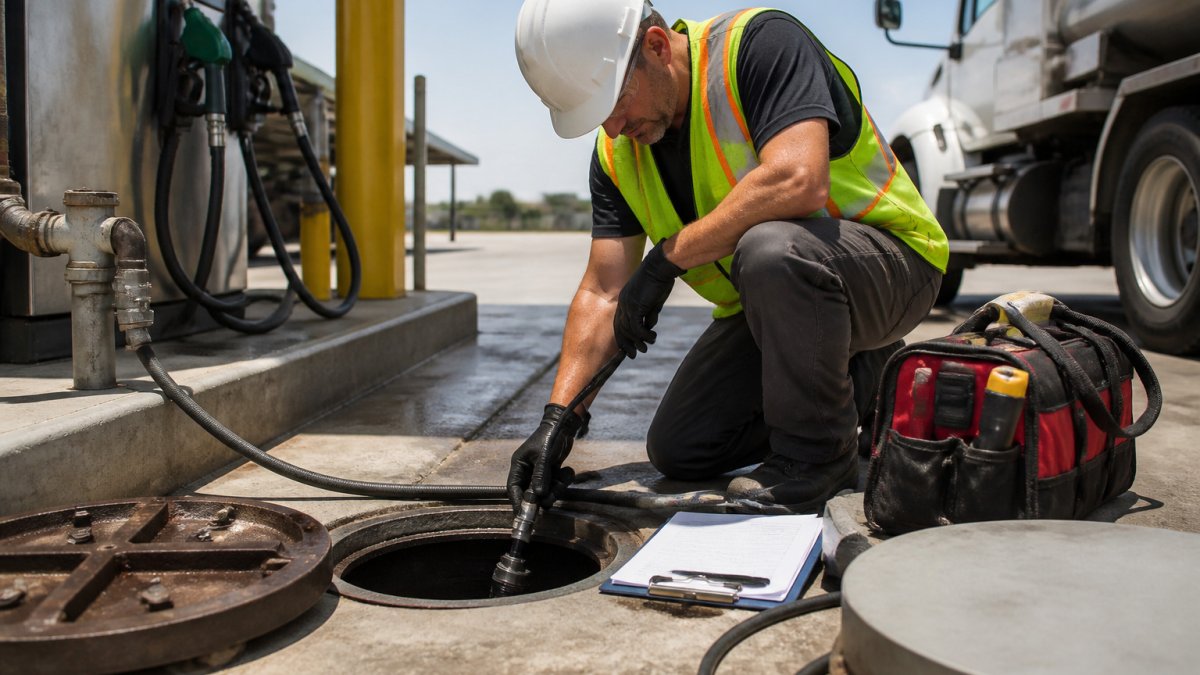
Reference checks can help you ask about a provider's independence. Ask recent clients: Did the provider recommend repairs, then bid on them?
USTEX LLC provides direct access to founder Doug Metzker for all testing and reporting, same-day documentation in the format required by reviewing agencies, and independent testing with no competing claims on repair or construction work.
Your facility's compliance depends on this choice. Invest time in verification now.
Moving Forward with Conflict-Free Tank Testing
Conflicts of interest tank testing are preventable. They require deliberate structural choices by your provider and careful verification by you.
The process is straightforward: identify where conflicts could arise and ask providers about their independence.
When you need urgent tank testing to resolve red-tag issues, speed and accuracy matter.
Request dispatch with USTEX LLC for same-day documentation in the format required by reviewing agencies from a DATCP licensed specialty firm with no competing claims on repair or construction work.
Frequently Asked Questions
What is a conflict of interest in tank testing?
A conflict of interest in tank testing can arise when the testing provider has a financial, personal, or organizational stake in the repair, remediation, or construction outcome. If the same company that tests your tank also performs repairs, ask whether it has a financial interest in the outcome.
How can you verify that a tank testing company is truly independent?
Ask whether the provider offers repair, remediation, or construction services. For USTEX, you can request documentation of its DATCP licensing status and ask about its independent testing services, same-day documentation, and direct access to the founder for testing and reporting.
What should a compliant tank testing report include?
USTEX provides clear, measured results with raw data appended to reports and same-day documentation in the format required by reviewing agencies.
What questions should you ask a tank testing provider before hiring them?
Ask: Do you offer repair or construction services? Who will conduct the testing, and can I speak directly with them? Can you provide same-day documentation in our regulator's required format? What is your DATCP license number?
